
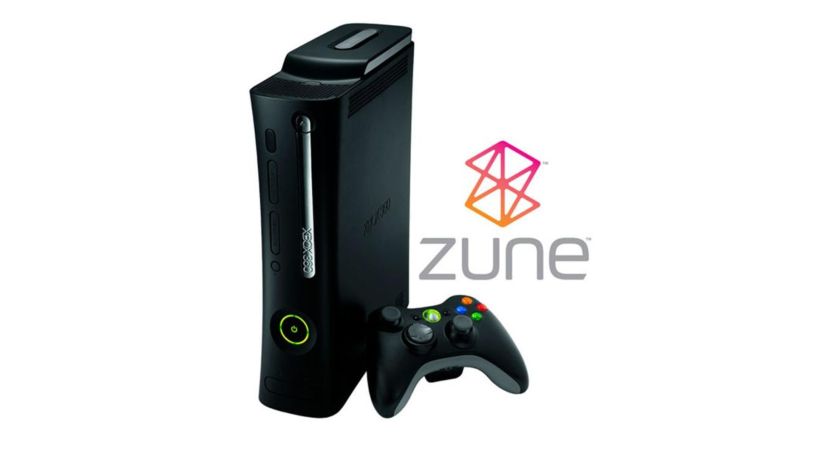
REDMOND, Wash. – Microsoft recently announced it’s about to share some major news in regard to the Xbox brand, leaving many to speculate about the popular gaming system’s future.
Phil Spencer, the head at Microsoft Gaming, has suggested Xbox is going to move away from console exclusive content and open its popular IPs, such as Halo, Gears of War, and Starfield, to rivals Sony and Nintendo. It’s a move that has left many people wondering “what’s the point in buying an Xbox, then?”
However, according to our sources, the entertainment behemoth is about to make an even more startling announcement: it’s going to cease production of the Xbox console, and future generations of the beloved gaming machine, as early as 2025. Instead, the company is going to reinvest the money it makes from porting its games to the PlayStation and Switch into reviving the defunct Zune media player.
“Making game consoles is a money pit,” said our source, who asked to remain anonymous. “The company loses about $100-$200 on each Xbox console. We’ve sold more than 21 million Series S and Series X models since November 2020. You do the math; that’s more than $2 billion lost. You factor in sales from the OG Xbox, 360, and Xbox One and those losses are even more exponential.”
Our source went on to say the company recoups much of that money through its sale of games and subscriptions to Xbox Live and Xbox Game Pass.
“If you take the consoles out of the equation, even with the amount we pay to developers, all our numbers are in the black,” they said. “Financially, this move makes sense. Look at what it did for Sega.”
They are of course referring to Sega Corporation, the legendary video game company behind such hit titles as Sonic the Hedgehog, Bayonetta, and Sega Bass Fishing. The Japanese company was responsible for many millennials’ childhood memories with the Sega Genesis and Game Gear gaming consoles. However, the business stopped producing consoles in 2001 and focused entirely on game production and currently reels in around $1.9 billion annually.
The move to revive the Zune may leave many people scratching their heads, especially since the media player never really gained an edge against its biggest competitor, the iPod. However, when the Zune first launched in 2006, it really was a piece of technology ahead of its time. Rather than being a machine fixated on the purchase of individual songs, like the iPod, the Zune gave users the ability to stream music via the MSN music service.
“You know it’s kinda like that MC Lars song, Download This Song, when he said, ‘music was a product, now it is a service,'” said our source. “We’ve moved away from buying records and toward subscribing to music streaming services. How do we capitalize on that? We already have a product on our shelves that, with a system update, can utilize things like Spotify, Pandora, or even iHeartRadio. I think we’ve finally reached the point in history when people will understand just how ahead of its time the Zune really was.”
We’re left wondering if Microsoft has thought this plan to divest their entire profit margin into the Zune all the way through given the fact that Apple stopped producing the iPod after the introduction of the iPhone, a mobile smartphone capable of doing everything the iPod could do, plus more. When asked if they thought the prominence of smart phones, and the ability to stream music via the multitude of apps available, including for the services they mentions, would deter consumers from buying a Zune, they had no comment.
It’s too early to tell how this move will affect Microsoft, but we plan on watching the situation very closely. Would you buy a new Zune player if they were made commercially available again?
Sign up for the Alpine 6 Action News newsletter or subscribe to our Patreon and never miss another article!
Discover more from Alpine 6 Action News
Subscribe to get the latest posts sent to your email.
 Alpine 6 Action News