
WASHINGTON — In what critics call a deliberate sleight-of-hand to distract from corporate corruption, the FBI has been ordered to dedicate roughly one-third of its time to immigration enforcement—a move many say reframes the American Dream as a gated community with armed guards and a “No Vacancy” sign.
The FBI’s shift coincided with new Justice Department guidelines that narrow the scope of white-collar crime prosecutions. Under the changes, prosecutors are urged to consider whether corporate misconduct really needs a criminal charge, or if it can be handled with a strongly worded memo, a wink, and maybe an ethics webinar.
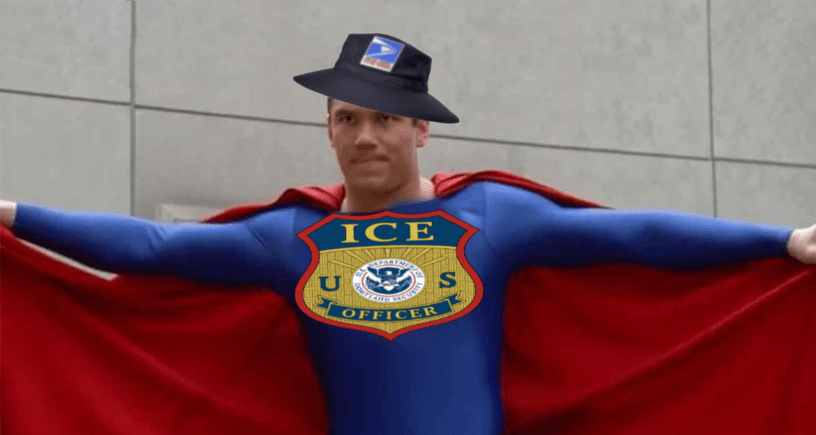
While white-collar crime teams shrink, immigration enforcement is ballooning. ICE has deputized a record number of local police officers, DEA agents, and IRS auditors to hunt down undocumented workers. The agency’s new “any badge will do” policy extends to U.S. Border Patrol, ATF, and even the U.S. Postal Inspection Service, ensuring the nation’s letters are delivered—and its dishwashers deported—with equal efficiency.
Vice President J.D. Vance says the program is already paying off.
“I had the pleasure of deputizing my postmaster just the other day,” said Vance. “I gave him a playful pat-pat on the bum and said, ‘Git on out there and wrangle up some brown folk, but make sure you don’t get my wife’.”
The Vice President of the United States added, “Wink-wink.”
Steven Miller, the White House deputy chief of staff for policy and homeland security adviser, says the key is to go where “illegals congregate.”
“Home Depot parking lots, 7-Elevens, laundromats—anywhere you can find hard-working people who came here chasing the same dream our grandparents did, but without the correct paperwork,” Miller said. “That’s where ICE needs to be. This is about protecting Americans, and the American Dream belongs to Americans only.”
For Ramon, a 27-year-old day laborer, that dream has turned into a nightmare.
“I was always told that working hard, paying your taxes, and being a good person is what made you an American, and what made America great,” Ramon said. “I was lucky the other day—I showed up a little late when ICE agents raided the Lowe’s parking lot so they didn’t get me. My mailman saw me and just sort of motioned me to go home.”
Ramon came to the United States when he was five, the son of a carpenter who crossed the border legally with a visa to give his family a better life. That visa was not renewed during President Donald Trump’s first term. Years later, an administrative error left the family with no documentation showing they ever entered the country, effectively turning them into “illegals” overnight.
For Tad Crater, who runs a charity foundation providing food and shelter to all in need, the rhetoric is chilling.
“People are afraid—not just immigrants, but anyone who doesn’t look like they stepped out of a 1950s sitcom,” Crater said. “We’re criminalizing ambition and punishing the exact people who make this country run. The American Dream isn’t dying—it’s being repossessed.”
Supporters of the crackdown say it’s a national security imperative. Critics argue it’s a cynical misdirection, allowing corporate fraudsters and white-collar criminals—the privileged few whose actions truly destabilize the nation—to go un-investigated. Meanwhile, non-criminal acts like seeking work, buying groceries, or simply existing without updated paperwork are treated as prosecutable offenses, with arrests made without cause, investigation, or warrant.
Discover more from Alpine 6 Action News
Subscribe to get the latest posts sent to your email.
 Alpine 6 Action News