
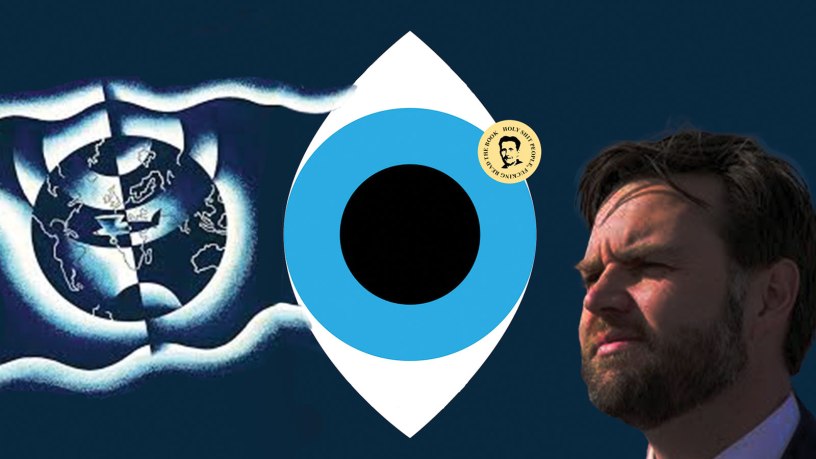
WASHINGTON — Political theorists, cultural critics, and your most paranoid friend at the bar are locked in a spirited argument: is modern society more like George Orwell’s 1984, Aldous Huxley’s Brave New World, or an unholy hybrid designed by a committee of James Bond villains and Silicon Valley consultants?
Supporters of the Orwellian thesis point to ever-expanding surveillance programs, the manipulation of language, and governments’ uncanny ability to rewrite yesterday’s facts without breaking a sweat. “We’re in 1984, full stop,” said Dr. Helen Morvan, a political historian. “Big Brother just outsourced to private data brokers and branded itself as a smart home assistant.”
Huxleyans counter that the real danger isn’t the boot on your neck, but the warm, numbing embrace of endless entertainment, consumerism, and chemical mood enhancement. “In Brave New World, people were too distracted to care about freedom,” said media critic Alonzo Reid. “Look around—half the population is one dopamine hit away from forgetting there even was a First Amendment.”
A growing camp believes the two worlds have merged into what one panelist called “1984 with better lighting and snack breaks.” In this scenario, surveillance feeds directly into algorithms designed not just to punish dissent, but to sell you sneakers, streaming subscriptions, and a curated sense of happiness.
“This is the genius of the modern dystopia,” said Dr. Morvan. “You get your telescreen and your soma. You’re watched, tracked, and occasionally censored—but the app also knows your favorite pizza topping and sends it right to your door.”
Vice President J.D. Vance weighed in Thursday, expressing strong support for “whichever one of those books has the good parts.” When pressed, Vance admitted he had not read either 1984 or Brave New World himself but recalled that “one of my kids—the tallest one, maybe? —read me a couple of parts from one of them before I took a nap on my favorite couch one time.” Vance praised the book’s “excellent ideas about keeping everyone in line” and said more Americans should “probably be living like that, whichever that is.”
Tad Crater, a Suffolk University professor of cultural collapse, says the question isn’t which dystopia we’re in—it’s whether anyone’s still paying attention. “Look, Orwell feared we’d be crushed by what we hate. Huxley feared we’d be seduced by what we love. We solved that problem by doing both at once, with free two-day shipping. We’ve got the boot and the bliss working hand in hand, making sure we’re too comfortable to protest and too distracted to notice the walls closing in. The real kicker? Much like Orwell’s telescreens, we installed the means to our own bliss ourselves, because they came with a free trial of premium Prime Video.”
Discover more from Alpine 6 Action News
Subscribe to get the latest posts sent to your email.

